

Product Description
Montessori Sensorial Purpose
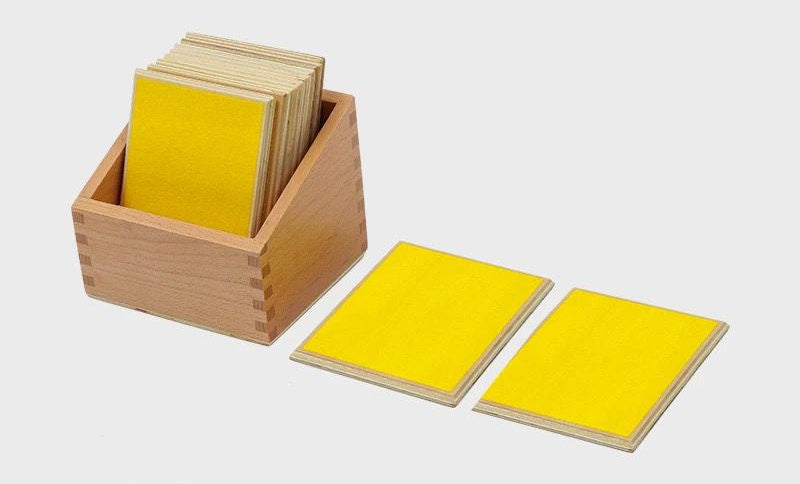
The Rough and Smooth Touch Tablets isolate the tactile sense by offering surfaces of varying texture. Through repeated hands-on exploration, the child learns to discriminate between degrees of roughness and smoothness using touch alone.
Pairing and Matching Activity
The tablets are presented in pairs. The child explores each tablet using the fingertips and matches the identical textures. As the child gains confidence, the activity may be extended by closing the eyes or using a blindfold, encouraging focused tactile perception without visual input.
Grading the Tablets
After successful pairing, the child may grade the tablets by texture. The tablets are arranged in sequence from roughest to least rough, strengthening tactile discrimination and preparing the hand for later sensorial and academic work.
Infant and Toddler Use
This material is suitable for infant and toddler environments when presented simply and slowly. It supports early sensory awareness, concentration, and purposeful hand movement in a calm, prepared environment.
Material Details
- Set of rough and smooth touch tablets arranged in pairs
- Five matching pairs with progressively varied textures
- Natural wooden tablets with securely fixed tactile surfaces
- Includes a wooden storage box for orderly presentation
- Designed for classroom and home Montessori use
Age Recommendation
Recommended for infants and toddlers under guided presentation, and for children approximately 2.5 years and older for full pairing and grading work.