

Product Description
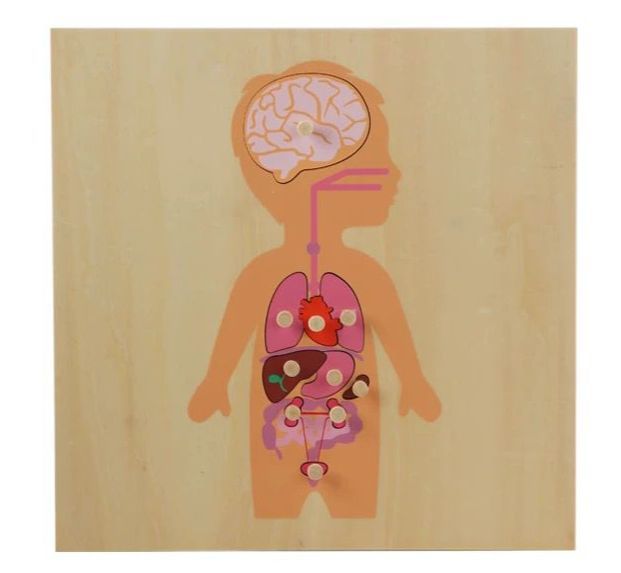
Support early biology exploration with the Montessori Human Organs Puzzle. This child-sized wooden puzzle features major internal organs and encourages learners to develop anatomical awareness through hands-on, sensorial engagement. Perfect for Casa and lower elementary Montessori environments.
Key Features
- Montessori-aligned material focusing on internal human anatomy
- Knobbed puzzle pieces for easy grasp and tactile exploration
- Represents key organs: brain, heart, lungs, liver, kidneys, intestines, bladder
- Simple child silhouette design with color-coded organs for clarity
- Supports early biology and body awareness in science curriculum
Benefits
- Encourages fine motor development and visual discrimination
- Introduces vocabulary related to the human body and internal systems
- Helps children understand how body parts work together
- Promotes independent, focused learning through sensorial materials
What's Included
- 1 Wooden puzzle board with child silhouette
- 9 knobbed pieces representing major internal organs
Specifications
- Dimensions: 24 cm x 24 cm
- Material: Premium plywood with child-safe lacquer
- Puzzle Pieces: 9 anatomical parts with sturdy wooden knobs
- Finish: Smooth surface with eco-friendly, non-toxic paints
Looking to discover more?
See It in Action
Use the organs puzzle during science shelf rotations or health education lessons. Combine with anatomy books, real-life x-rays, or classification cards for multi-sensory learning. Excellent for visual learners exploring the systems of the body.